The Menhirs
Standing Stones of Brittany
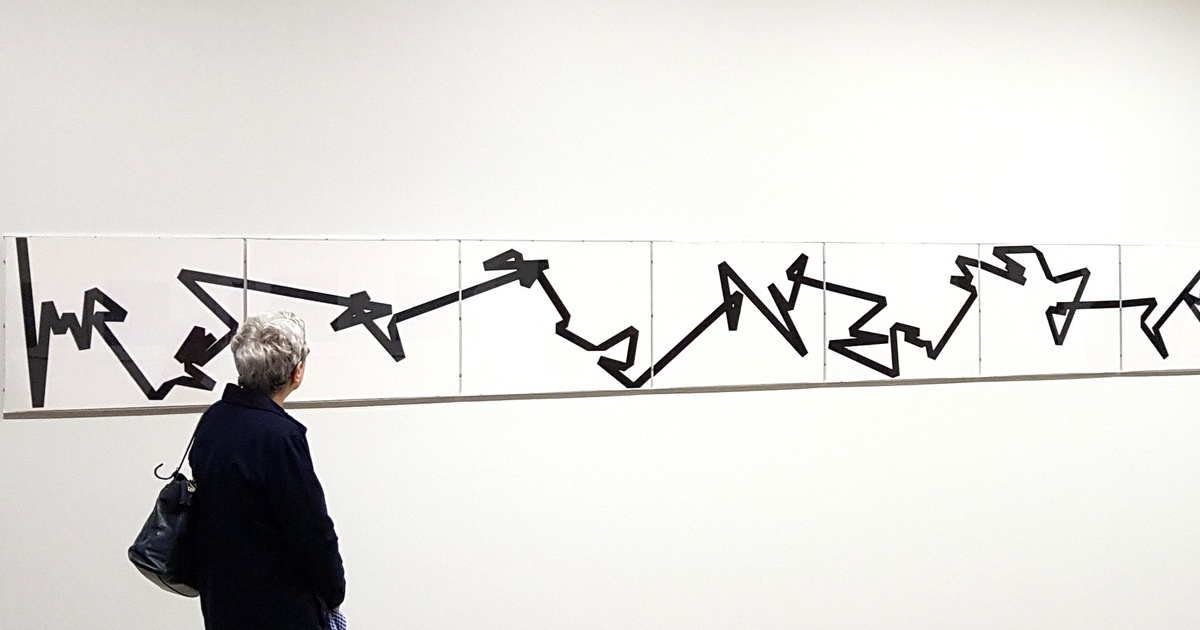
The word "menhir" comes from the Breton men (stone) and hir (long). Brittany has the highest concentration of megalithic sites in the world — over 3,000 standing stones dot the landscape, the most famous being the alignments at Carnac: 3,000 individual menhirs arranged in rows stretching nearly four kilometres.
These stones have stood for 6,000 years. They were old when the pyramids were built. They have weathered Atlantic storms, watched Celtic tribes come and go, seen the Romans and the Vikings and the Bretons themselves settle the land. Each stone leans slightly, tilted by millennia of soil movement and wind. No two are alike.
The Trevarn mark is three ascending menhirs — small, medium, large — representing growth, stability, and aspiration. They are not identical; like real standing stones, each has its own character.
Three Individuals, Not Three Copies
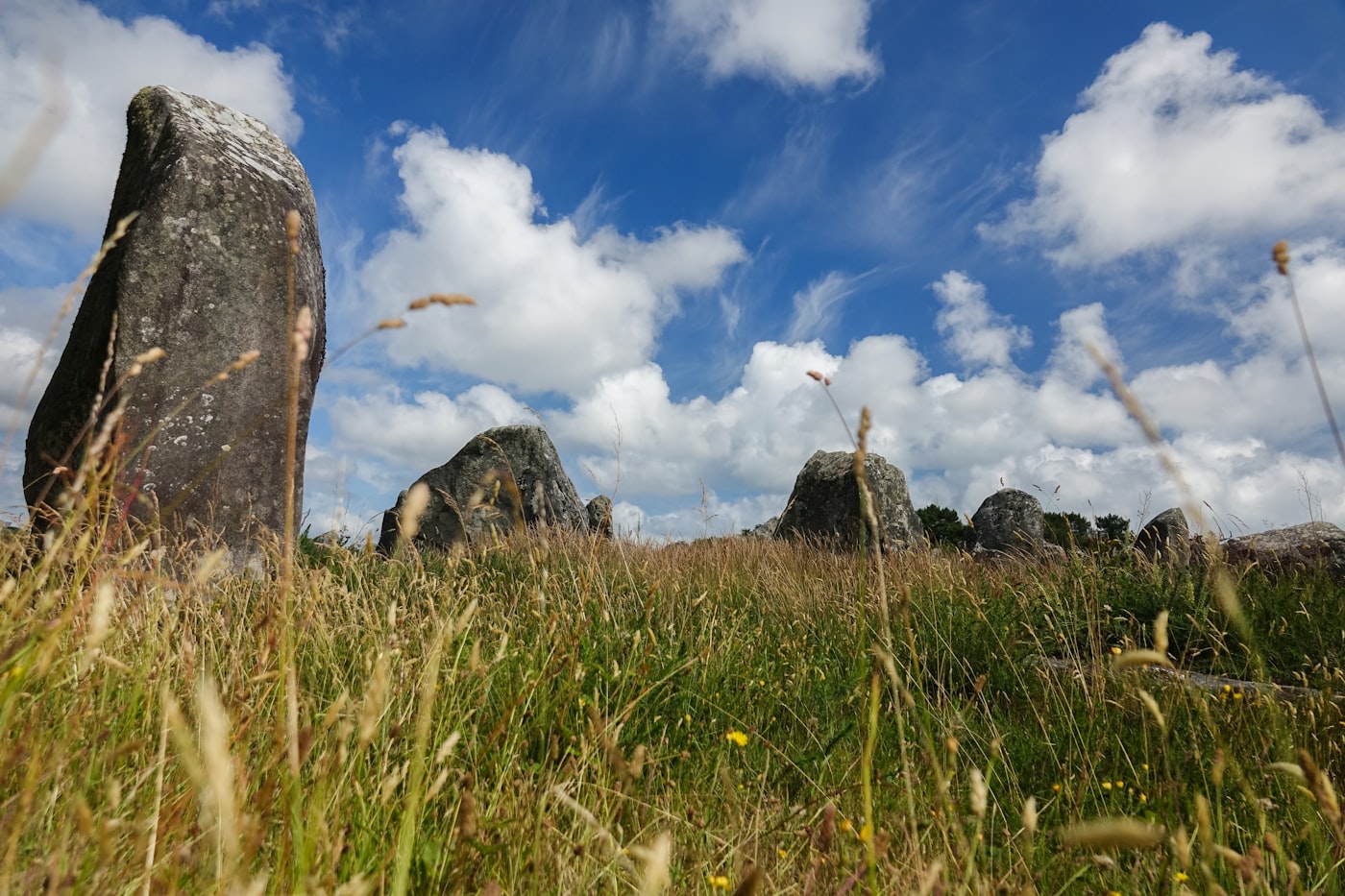
Real menhirs lean, tilt, and weather differently. The three stones in this mark each have their own personality:
| Stone | Character | Details |
|---|---|---|
| Small (left) | Leans right, narrow top | Left edge steep, right edge gradual. Top tilts down-left. Compact, dense. |
| Medium (centre) | Leans left, broader shoulders | Right edge steeper than left. Top tilts opposite to stone 1. More open stance. |
| Large (right) | Near-upright, asymmetric edges | Left edge much steeper than right. Wider flat top. The anchor — most mass, most presence. |
Vera Molnár
A Pioneer of Computer Art 1924–2023
Vera Molnár was a Hungarian-French artist who became one of the most important figures in the history of computer-generated art. Born in Budapest in 1924, she moved to Paris in 1947 and began exploring systematic, rule-based art long before computers were accessible to artists.
In 1968, she gained access to a computer at a research lab in Paris and began writing programs to generate visual art — one of the first artists in the world to do so. For the next five decades, she explored the territory between geometric order and organic variation, creating thousands of works that demonstrated how algorithmic rules could produce images with life and personality.
Molnár worked until her death in 2023 at age 99, still writing code, still exploring. Her influence spans the entire field of generative art, and her techniques are now embedded in the visual DNA of computational design.
1-2% de Désordre
Molnár's central insight was that pure geometry is dead, but pure randomness is noise. The interesting territory is in between: structures with just enough irregularity to feel alive.
"I introduce a bit of mess: some random irregularities here and there, combining order and disorder."— Vera Molnár
She called this "1-2% de désordre" — the minimum amount of controlled perturbation needed to make a geometric form feel organic rather than mechanical. Not chaos, but almost order. The eye recognises the underlying structure while simultaneously perceiving that something is subtly, pleasingly wrong.
This technique is now fundamental to generative design. The Trevarn mark uses 2% disorder: every vertex is shifted slightly from its mathematically perfect position. Edges wander. Baselines tilt. The mark feels weathered, geological, hand-made — even though it was drawn by code.
Montagne Sainte-Victoire 1987 onwards
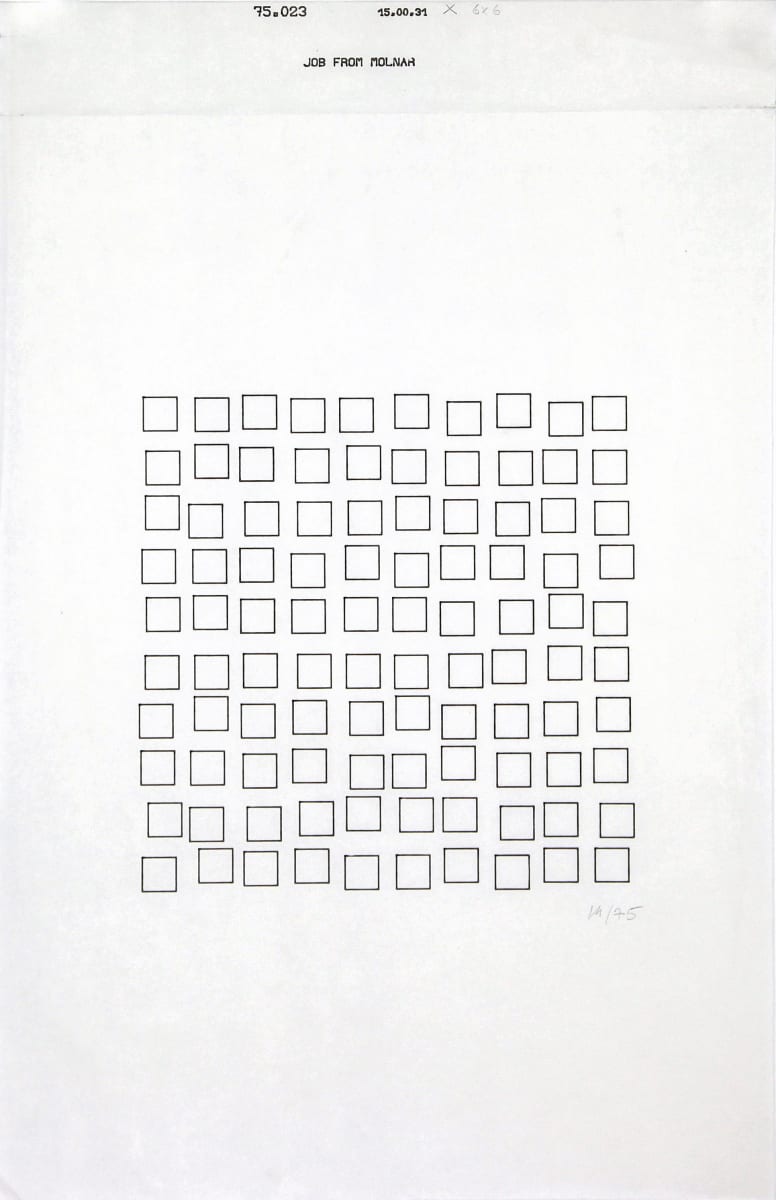
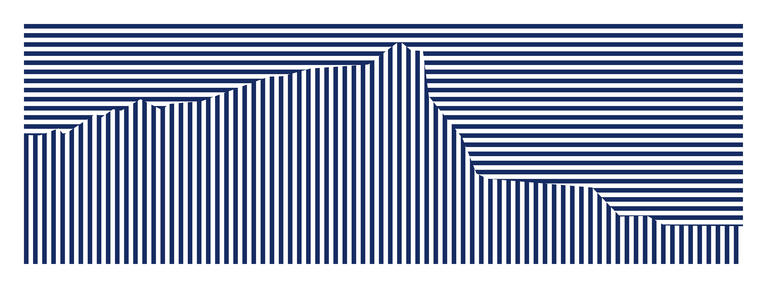
Molnár's most celebrated series reimagines Cézanne's iconic mountain — the same subject he painted over 80 times — through algorithmic means. She described seeing the Gaussian bell curve in the mountain's silhouette, then systematically deconstructing it.
The series spans decades and thousands of variations. She wrote:
"The number of back and forth increased from 2 to 32... the line also went thicker along the way."— Vera Molnár, on Montagne Sainte-Victoire series
Her object-book of the series offers "exactly 6,765,201 versions of Montagne Sainte-Victoire" — the same form endlessly recombined through algorithmic rules. This is the spirit behind the Trevarn mark: a form that feels singular and intentional, but is actually part of an infinite family of possible variations.

The Continuous Line
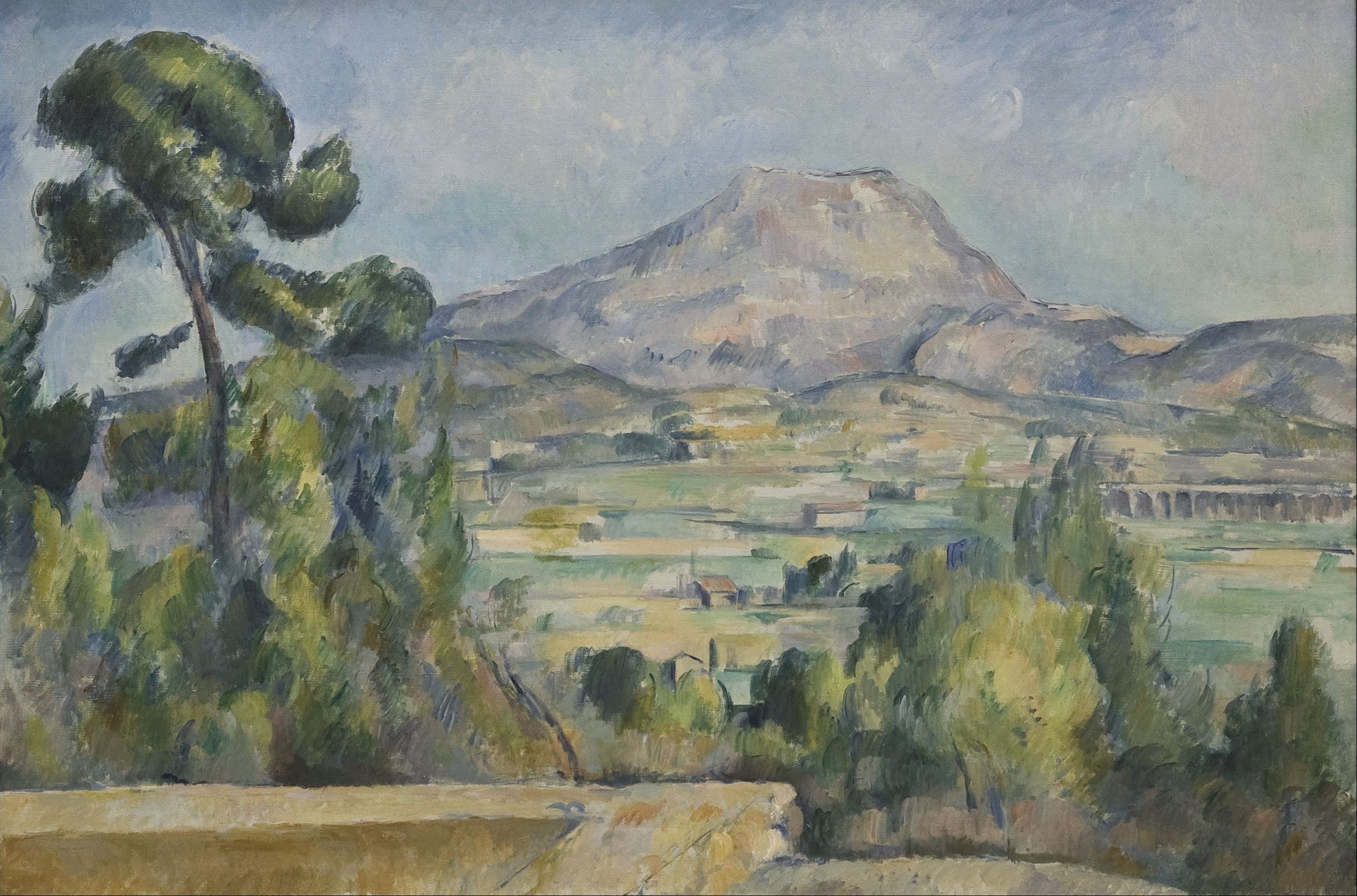
Many of Molnár's works use a continuous-line technique — a single unbroken path generating complex structures. The pen never lifts. Form emerges from the wandering of a single mark.
The Trevarn mark borrows this technique directly. The three menhirs are traced by one continuous polyline: the pen starts at the base of the first stone, rises up its left edge, crosses its top, descends the right edge, travels along the baseline to the next stone, and repeats. Twelve vertices, one path, three forms.
At small sizes (favicon, app icon), the connecting baseline becomes hard to read. For these contexts, the mark can be rendered as three discrete polygons — the same stone shapes, now separated.